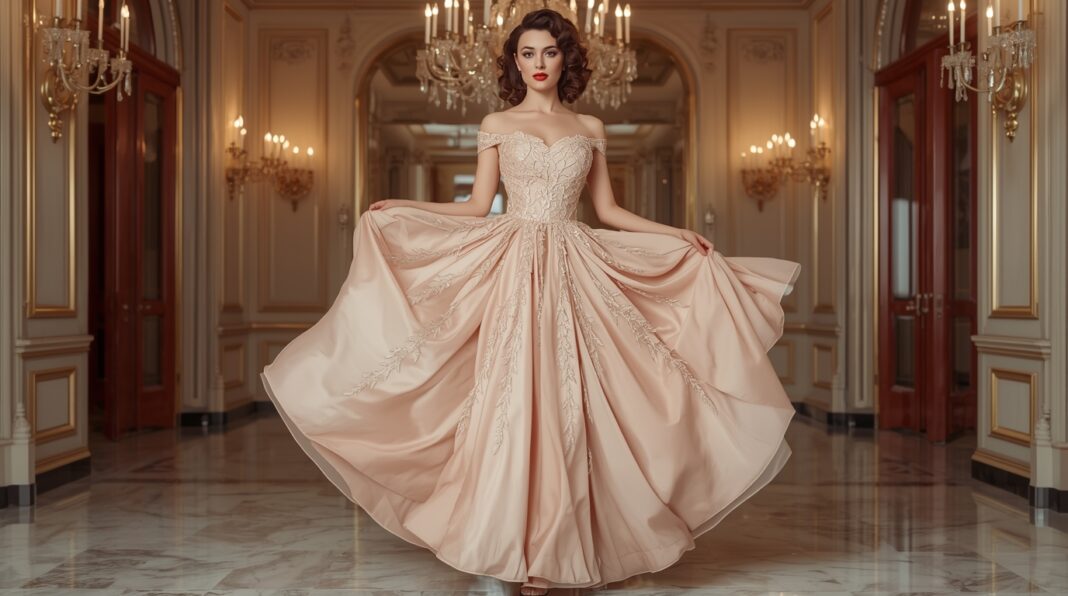

The 1950s fashion dresses represent one of the most transformative and celebrated decades in sartorial history. Emerging from the austerity of World War II, the 1950s ushered in an era of opulence, femininity, and structured beauty that redefined women’s clothing forever. From Christian Dior’s revolutionary New Look to the playful swing dresses worn by teenagers at sock hops, 1950s fashion dresses embodied hope, prosperity, and a return to glamour.
This comprehensive guide explores the silhouettes, fabrics, designers, and cultural forces behind 1950s fashion dresses, revealing why they remain a cornerstone of vintage style and continue to influence runways in 2025.
The Birth of the New Look: Dior Rewrites Fashion Rules
No discussion of 1950s fashion dresses is complete without Christian Dior. On February 12, 1947, Dior unveiled his debut collection—later dubbed the New Look by Harper’s Bazaar editor Carmel Snow. The collection featured rounded shoulders, cinched waists, and full, calf-length skirts supported by layers of petticoats. It was a dramatic departure from the boxy, utilitarian wartime styles.
“I have designed flower women.” – Christian Dior
The New Look became the defining silhouette of 1950s fashion dresses. By 1950, it dominated Paris, London, and New York. Women embraced the hourglass figure, with waistlines nipped to 18–22 inches using corsets, girdles, and structured bodices. Skirts flared dramatically, often requiring up to 25 yards of fabric—a luxury after rationing.
Dior’s influence extended beyond couture. Department stores like Sears and Montgomery Ward offered affordable New Look-inspired 1950s fashion dresses in cotton and rayon, making the style accessible to the middle class.
Key Silhouettes of 1950s Fashion Dresses
The decade saw several distinct dress shapes, each tied to occasion, age, and social status:
1. The Hourglass Sheath Dress
- Fitted bodice and hips, often with a pencil skirt
- Worn by stars like Audrey Hepburn and Grace Kelly
- Fabrics: Wool crepe, satin, taffeta
- Iconic example: Hepburn’s Sabrina (1954) black cocktail dress by Givenchy
2. The Full-Skirted Swing Dress
- The quintessential teen and daywear style
- Circle skirts with 12–15 gore panels
- Paired with crinoline petticoats for volume
- Prints: Polka dots, cherries, florals, novelty patterns (poodles, anyone?)
3. The Shirtwaist Dress
- Inspired by men’s shirts: button-front, collared, belted
- Practical yet feminine; popularized by Claire McCardell
- Worn by housewives and first ladies (Mamie Eisenhower loved them)
4. The Cocktail Dress
- Knee-length, often strapless or with portrait necklines
- Embellished with sequins, lace, or velvet
- Little black dress (LBD) became a staple thanks to Coco Chanel and Hubert de Givenchy
5. The Prom Gown
- Floor-length 1950s fashion dresses in pastel tulle and satin
- Strapless bodices with sweetheart necklines
- Worn with long gloves, pearl chokers, and bouffant hairstyles
Fabrics, Colors, and Details That Defined 1950s Fashion Dresses
Post-war synthetic innovations and returning luxury fabrics shaped 1950s fashion dresses:
| Fabric | Use in 1950s Fashion Dresses |
|---|---|
| Cotton | Day dresses, shirtwaists, gingham checks |
| Nylon & Orlon | Petticoats, full skirts, affordable prom gowns |
| Taffeta | Evening and prom dresses; rustled when walking |
| Velvet | Winter cocktail dresses, opera coats |
| Satin | Bias-cut sheaths, wedding gown trains |
| Lace | Overlay on bodices, sleeves, and hems |
Colors ranged from soft pastels (mint, powder blue, blush pink) to bold jewel tones (emerald, ruby, sapphire). Black-and-white contrasts dominated formalwear.
Details included:
- Peter Pan collars
- Bow accents at waist or neckline
- Covered buttons
- Ruching and draping
- Netting and crinoline for skirt volume
Designers Who Shaped 1950s Fashion Dresses
While Dior led the charge, other visionaries expanded the decade’s aesthetic:
- Cristóbal Balenciaga – Introduced the sack dress (1957), a looser alternative to cinched waists
- Hubert de Givenchy – Dressed Audrey Hepburn; pioneered separates and minimalist chic
- Claire McCardell – American sportswear pioneer; made 1950s fashion dresses functional with popover designs
- Norman Hartnell – Designed Queen Elizabeth II’s 1953 coronation gown
- Charles James – Architectural ball gowns with sculptural silhouettes
Cultural Impact: 1950s Fashion Dresses in Film, TV, and Society
1950s fashion dresses weren’t just clothes—they were cultural symbols.
On Screen:
- Grace Kelly in Rear Window (1954) wore a mint green chiffon dress with a full skirt
- Marilyn Monroe’s white pleated halter dress in The Seven Year Itch (1955) became iconic
- Elizabeth Taylor in Cat on a Hot Tin Roof (1958) showcased slinky sheaths
In Society:
- Suburban Housewives: The shirtwaist dress symbolized domestic ideals
- Teen Culture: Bobby socks, saddle shoes, and swing skirts defined the bobby-soxer
- Debutantes: White strapless gowns with long gloves marked “coming out” balls
The rise of television brought 1950s fashion dresses into living rooms. Shows like I Love Lucy featured Lucille Ball in playful house dresses, while Father Knows Best showcased polished suburban style.
The Rise of Ready-to-Wear and Teen Fashion
The 1950s saw the democratization of fashion. Mail-order catalogs and junior departments catered to teenagers—a new consumer class with disposable income.
Brands like Jonathan Logan, L’Aiglon, and Jantzen mass-produced 1950s fashion dresses in junior sizes (5–15). Prom became a national 50s ritual, with girls spending weeks selecting tulle gowns in candy colors.
Vintage ads boasted:
“Look like a million—for under $10.98!”
Why 1950s Fashion Dresses Still Matter in 2025
The influence of 1950s fashion dresses endures:
- Runway Revivals: Dior, Oscar de la Renta, and Dolce & Gabbana regularly reference the New Look
- Wedding Trends: Tea-length dresses and petticoats remain popular for vintage brides
- Sustainable Fashion: Thrifted 1950s fashion dresses are prized for quality construction
- Pop Culture:Mad Men, The Marvelous Mrs. Maisel, and Grease keep the aesthetic alive
On platforms like Depop and Etsy, authentic 1950s fashion dresses fetch $150–$800, with prom gowns and Dior originals commanding thousands.
How to Wear 1950s Fashion Dresses Today
- Modernize the Silhouette: Pair a full-skirted dress with sneakers or a denim jacket
- Mix Textures: Layer a lace 1950s fashion dress over a turtleneck
- Accessorize Smartly: Cat-eye sunglasses, pearl earrings, structured handbags
- Tailor for Fit: Vintage sizing runs small—alter waists and hems
Conclusion: A Decade That Dressed the Future
The 1950s fashion dresses were more than garments—they were statements of resilience, femininity, and joy after years of hardship. From the couture salons of Paris to the soda fountains of small-town America, these dresses shaped how the world saw women: elegant, playful, powerful.
Eight decades later, the swing of a crinoline skirt or the nip of a cinched waist still turns heads. Whether you’re hunting for an original at a vintage fair or recreating the look with modern pieces, 1950s fashion dresses remain the gold standard of timeless style.


