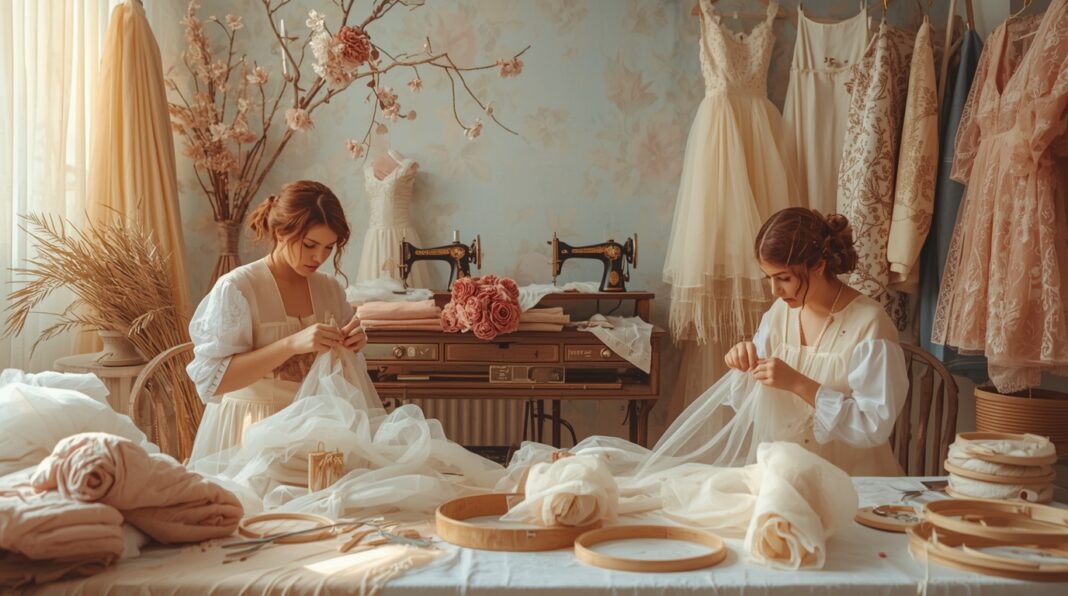

Introduction: The Delicate World of Tulliste
In the intricate tapestry of textile history, few terms evoke the sheer elegance and precision of Tulliste. Derived from the French word for a tulle maker or worker specializing in net fabrics, Tulliste refers to both the skilled artisan and the cultural legacy of crafting lightweight, hexagonal mesh textiles used in everything from bridal veils to haute couture gowns. As of 2025, Tulliste has transcended its industrial roots, emerging as a symbol of sustainable fashion and artisanal revival amid growing demands for ethical production.
This article delves into the multifaceted essence of Tulliste, tracing its origins in 19th-century France, the evolution of the profession, modern techniques, and its profound impact on contemporary design. Whether you’re a fashion enthusiast, a history buff, or an aspiring crafter, understanding Tulliste offers a window into a craft that balances delicacy with durability, tradition with innovation.
Origins of Tulliste: From Tulle to Textile Mastery
The story of Tulliste begins in the southwestern French town of Tulle, Corrèze, where the fabric that bears its name was first popularized in the early 19th century. Tulle, a fine net fabric characterized by its hexagonal weave, was initially developed for veils and lace in the 18th century but gained prominence around 1800 when machine production made it accessible beyond elite circles. The term “Tulliste” emerged as a descriptor for the workers—predominantly women—who mastered the art of preparing and weaving these threads, earning it a place in the French lexicon as both a profession and a geographical adjective.
Historically, Tulliste artisans operated in ateliers across Calais and Tulle, where the Industrial Revolution transformed manual labor into semi-automated processes. By the mid-1800s, Tulliste workers were instrumental in the “guerre en dentelle” (lace war) strikes of 1900, where over 25,000 Tulliste and lace makers demanded fair wages, highlighting the profession’s role in labor movements. These strikes, lasting 87 days and involving 6,680 workers, underscored the grueling yet vital work of Tulliste, who handled repetitive tasks like bobinage (winding threads), ourdissage (warping), and mounting looms for tulle or lace production.
Tulle’s invention is often credited to Scottish weaver John Heathcoat in 1808, who patented a machine for Nottingham lace that evolved into modern tulle looms. However, French Tulliste refined the craft, adapting it for Parisian fashion houses. By the 1830s, Tulliste techniques were exported globally, influencing Victorian-era undergarments and ballet costumes.
The Role and Skills of a Tulliste Artisan
At its core, a Tulliste is a textile specialist focused on preparing yarns for weaving tulle or lace. This profession demands meticulous attention, as Tulliste workers manually or mechanically wind, press, and warp threads onto beams for looms. Key responsibilities include:
- Bobinage and Ourdissage: Winding filaments onto spools and aligning them for even tension.
- Garnissage and Montage: Fitting threads into loom harnesses, ensuring no tangles that could ruin intricate patterns.
- Quality Control: Inspecting for uniformity, as even minor irregularities can compromise the fabric’s signature lightness.
In traditional workshops, Tulliste operated in teams, often under dim gaslight, using tools like poinçons (punches) for manual perforation in early Jacquard looms. The work was physically demanding—repetitive motions led to repetitive strain, yet it required artistic intuition to anticipate weave outcomes.
Modern Tulliste have adapted to automation. Today’s professionals use computerized looms that integrate AI for pattern design, but the human touch remains essential for custom orders. In France, vocational training via CAP (Certificat d’Aptitude Professionnelle) programs teaches Tulliste skills, emphasizing sustainability—sourcing recycled polyester or silk blends to reduce environmental impact.
| Traditional Tulliste Tools | Modern Equivalents | Purpose |
|---|---|---|
| Poinçon à manche (hand punch) | Digital perforators | Thread alignment |
| Wooden shuttles | Automated warpers | Yarn tensioning |
| Manual looms | Computerized jacquards | Pattern weaving |
| Eye hooks (crochets) | Laser guides | Filament threading |
This evolution ensures Tulliste remains relevant, blending heritage with high-tech precision.
Cultural and Economic Impact of Tulliste
The Tulliste profession shaped France’s textile economy, particularly in regions like Corrèze and Pas-de-Calais. Tulle’s factories employed thousands, fostering a “tulliste” identity—workers who wore distinctive ear crochets for threading and formed tight-knit communities. Economically, Tulliste output fueled exports; by 1900, France produced 80% of Europe’s tulle, supporting industries from millinery to mourning veils.
Culturally, Tulliste influenced art and folklore. The 1900 strikes inspired Jean Jaurès’ writings on labor rights, while Tulle’s annual Fêtes de Tulle celebrate Tulliste heritage with lace-making demos. Globally, the fabric’s adoption in ballet (e.g., tutus) and weddings cemented Tulliste as synonymous with romance and grace.
In the 20th century, Tulliste faced decline due to globalization, but revivals in the 1980s—spurred by designers like Yves Saint Laurent—breathed new life. Today, Tulliste cooperatives in India and China produce affordable variants, though French purists advocate for “made in Tulle” authenticity.
Tulliste in Fashion: From Tradition to Trendsetting
No exploration of Tulliste is complete without its starring role in fashion. Tulle, the fabric of Tulliste, is prized for its ethereal quality—lightweight yet structured, sheer yet opaque when layered. Iconic uses include:
- Bridal Wear: Multi-tiered skirts in Vera Wang gowns.
- Haute Couture: Chanel’s fall 2024 collection featured Tulliste-inspired overlays.
- Street Style: Sheer Tulliste panels in sustainable athleisure.
In 2025, Tulliste has pivoted toward eco-fashion. Brands like Tulliste Fashion emphasize organic cotton tulle, reducing water use by 70% through innovative looms. This shift addresses fast fashion’s waste, with Tulliste artisans collaborating on upcycled designs—transforming old veils into modern dresses.
The fabric’s versatility shines in DIY trends: TikTok tutorials show how to dye Tulliste for custom tutus, democratizing the craft. Designers like Iris van Herpen use 3D-printed Tulliste for avant-garde pieces, proving its adaptability.
Modern Tulliste: Challenges and Innovations
Contemporary Tulliste face hurdles: Automation threatens jobs, with France’s tulle sector down 40% since 2000. Yet, innovations abound—bio-based tulle from algae threads offers biodegradability, aligning with EU green mandates.
Education preserves the craft; schools in Lyon train 500 aspiring Tulliste annually, incorporating VR simulations for loom setup. Globally, Tulliste influences pop culture—from Taylor Swift’s Eras Tour costumes to K-pop stage outfits.
Sustainability is key: Ethical Tulliste brands audit supply chains, ensuring fair wages—echoing 1900 strikers’ demands.
Conclusion: The Enduring Legacy of Tulliste
Tulliste embodies the delicate interplay of hands, history, and haute couture—a profession that wove France’s industrial soul into global glamour. From Tulle’s misty ateliers to 2025 runways, Tulliste reminds us that true elegance lies in craftsmanship. As sustainable practices elevate the craft, Tulliste invites us to cherish the threads that connect past and future. Whether crafting a veil or envisioning a gown, embrace Tulliste for style that’s as resilient as it is refined.


