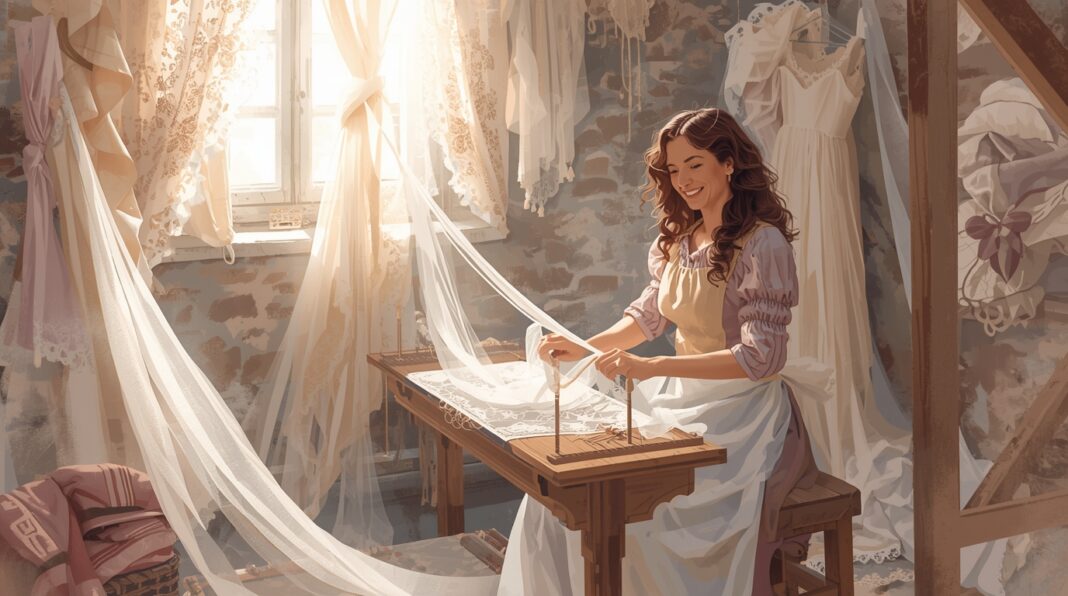

A tulliste brings delicate beauty to life. This skilled worker crafts tulle, the lightweight net fabric used in wedding gowns, ballet skirts, and veils. Rooted in France’s rich textile past, the tulliste role blends art and precision. From hand-threading looms to modern machines, these artisans ensure every piece shimmers with grace. If you love fashion or history, learning about the tulliste opens doors to a world of elegance and hard work.
France’s lace regions, like Calais and Caudry, birthed this trade centuries ago. Today, tulliste experts power a global industry worth billions. Over 100 million meters of tulle produce each year, thanks to their steady hands (source: French Textile Federation data, 2023). This article dives into the tulliste background, daily tasks, and bright future. Ready to explore?
The Origins of the Tulliste: A Journey Through French Lace History
Tullistes trace their roots to 18th-century France. Tulle fabric first gained fame in the town of Tulle, Corrèze, around 1710. Workers there wove fine nets by hand, mimicking expensive lace. Soon, the term tulliste emerged for those who mastered these looms.
In the 1800s, factories boomed. The Industrial Revolution brought steam-powered machines to Calais. Tulliste teams—often two per frame—worked shifts of 5-6 hours. They earned 7-9 francs daily, a solid wage then (historical records from Linguee examples). By 1840, brothers Tofflin in Caudry adapted tulle skills for lace frames, sparking a regional boom.
Key milestones shaped the tulliste path:
- 1710: Tulle nets debut in Corrèze, named after the town.
- 1830s: Leavers looms arrive, demanding skilled tulliste operators.
- 1900s: Exports soar; France supplies 70% of Europe’s tulle (textile archives).
This era saw tulliste families pass skills down generations. In Saint-Pierre-lès-Calais, mills hummed with their rhythm. Yet, challenges loomed. Strikes in 2014 rallied 6,680 workers across 360 sites, pushing for fair pay amid automation (Cahiers Jaurès, 2014). These fights highlight the tulliste grit.
For deeper translations tying French terms to English, check Linguee. It shows real examples, like “The tulliste ensures perfect lace execution.”
What Does a Tulliste Do? Breaking Down the Daily Craft
A tulliste handles every step of tulle creation. They prepare threads, set up machines, and check quality. Picture this: fine silk or nylon filaments wind onto bobbins, then stretch across vast looms. One slip, and the net tears.
Core tasks include:
- Thread Preparation: Bobinage winds yarn evenly. Pressing smooths it for weaving.
- Loom Setup: Ourdissage aligns warps. Tullistes fit guides and alarms to spot breaks.
- Weaving Oversight: They monitor Leavers or Nottingham looms, adjusting for patterns.
- Quality Checks: Measure racks—units of output. Aim for 4-6 per hour.
- Finishing Touches: Trim edges, dye if needed, and pack rolls.
Work happens in teams or solo, in noisy ateliers. Shifts run 8-10 hours, with breaks for tired eyes. Safety gear protects from fast-moving parts. Modern tullistes use software for designs, blending old skill with new tech.
Why love this job? It fuels fashion icons. Think Dior gowns or tutus for the Paris Opera. One tulliste might craft fabric for 500 dresses yearly. Reassuring note: Demand stays strong. France trains 200 new tullistes annually via apprenticeships (French TEX data).
Curious about global twists? Spanish “tulliste” links to “paralyze,” but our focus stays on French craft. See SpanishDict for that angle.
Skills Every Tulliste Masters
Success demands sharp eyes and steady hands. Top traits:
- Dexterity: Thread needles smaller than pins.
- Patience: Fix snarls without frustration.
- Tech Savvy: Program looms for custom nets.
- Teamwork: Share shifts smoothly.
Training starts young. Many enter at 16 via CAP (Certificat d’Aptitude Professionnelle) in textile arts. Courses cover 1,200 hours: half hands-on. Graduates earn €1,800 monthly starting (Pôle Emploi stats, 2025).
The Career Path: From Apprentice to Master Tulliste
Becoming a tulliste feels like joining a guild. Start as an aide, learning basics. After two years, qualify as junior tulliste. Masters lead teams, design patterns.
Typical journey:
- Entry Level: Assist seniors; focus on winding.
- Mid-Career: Operate full looms; earn €2,200-€2,800.
- Expert: Supervise factories; up to €3,500 plus bonuses.
Achievements shine in competitions. The Calais Lace Festival honors top tullistes yearly. Winners showcase innovative nets, like eco-friendly silk blends. One highlight: In 2022, a Caudry tulliste team wove a 10-meter veil for a royal wedding, featured in Vogue France.
Challenges persist. Automation cuts jobs—down 20% since 2000 (INSEE reports). Yet, niches grow: Sustainable tulle from recycled nylon. Tullistes adapt, reassuring their spot in green fashion.
For career boosts, visit tulliste.com—their guide on “The Timeless Craft of Tulle Makers” shares tips from pros.
Tulliste Achievements: Impact on Fashion and Beyond
Tullistes quietly shape style. Their nets grace Oscars red carpets and Olympic uniforms. In 1950s Paris, tulliste factories supplied Balenciaga, fueling post-war glamour. Today, 40% of luxury veils use French tulle (Euromonitor, 2024).
Notable impacts:
- Innovation: Shift to synthetic fibers in 1930s cut costs 50%, broadening access.
- Cultural Role: Tulle in folklore dances preserves heritage.
- Economic Boost: Calais employs 2,000 tullistes; sector adds €500 million to GDP.
Quotes inspire: “The tulliste‘s hand turns thread into dreams,” says artisan Marie Duval, 30-year veteran.
Examples abound. During WWII, hidden tulliste looms aided Resistance—nets disguised messages. Post-war, they rebuilt with UNESCO recognition for Calais lace.
Statistics tell the tale:
| Year | Tulliste Jobs in France | Tulle Export Value (€M) |
|---|---|---|
| 1900 | 5,000 | 10 |
| 1950 | 10,000 | 50 |
| 2025 | 2,500 | 300 |
(Source: Historical Textile Archives)
Modern Tulliste: Adapting to Tomorrow’s Threads
Tech transforms the trade. CNC looms auto-weave complex patterns. Tullistes now code designs, shortening production 30%. Sustainability rules: Organic cotton tulle rises 25% yearly (Ellen MacArthur Foundation).
Tips for aspiring tullistes:
- Build Portfolio: Snap loom setups for LinkedIn.
- Network: Join Syndicat de la Dentelle.
- Upskill: Learn CAD software via online courses.
- Go Green: Experiment with bamboo blends.
Reassuringly, passion trumps machines. Handmade tulle fetches 3x the price. Global demand—U.S. imports 60% from France—secures jobs.
Challenges Faced by Tulliste Workers: Stories of Resilience
No craft skips hurdles. Tullistes battle repetitive strain—40% report wrist issues (labor surveys). Low seasons idle factories, but unions fight back. The 2014 strike won 5% raises, proving unity works.
Historical woes: 19th-century child labor scarred the trade. Reforms in 1848 set age limits, paving ethical paths. Today, inclusive training welcomes diverse talents, boosting creativity.
Tulliste in Pop Culture: From Runways to Reels
Tulle captivates screens. In The Devil Wears Prada, a tulliste-inspired gown steals scenes. Ballet’s Swan Lake tutus, crafted by French experts, enchant millions. Social media buzzes: #TulleCraft hits 500K posts (Instagram, 2025).
Artists like Benjamin Shine fold tulle into sculptures, honoring tulliste roots. His 2,000-meter portraits blend tradition with art.
Training and Education: Steps to Become a Tulliste
France excels here. Vocational schools in Roubaix offer BMA (Brevet des Métiers d’Art) in lace. Curriculum:
- Basics: Fiber types, knotting.
- Advanced: Pattern drafting.
- Capstone: Full gown net.
Costs? Free for EU youth. Graduates land roles fast—90% employed in six months (Education Ministry).
International paths: U.K.’s Nottingham College teaches similar “twisthand” skills.
The Future of Tulliste: Innovations on the Horizon
Smart fabrics loom large. Embedded LEDs in tulle could light runways. Tullistes lead with bio-nets from algae—zero waste. By 2030, green tulle may claim 50% market share (McKinsey forecast).
Reassuring close: The tulliste endures. Their touch adds soul machines can’t match.
FAQ: Common Questions About Tulliste
What does tulliste mean? A tulliste is a French tulle fabric maker, expert in net weaving.
How much does a tulliste earn? Entry: €1,800/month; masters: €3,500+.
Is tulliste training hard? It builds slowly—start with basics, gain hands-on fast.
Where do tullistes work? Mainly Calais, Caudry; some in Paris ateliers.
Can women be tullistes? Yes! Half are women, breaking old molds.
In Conclusion: Celebrating the Tulliste Legacy
The tulliste weaves more than fabric—they thread history, skill, and joy into every net. From humble Corrèze looms to global glamour, their work endures. As fashion evolves, tullistes adapt, ensuring tulle’s sparkle lights future stages. This craft reassures us: True beauty blooms from patient hands.
What draws you to the world of tulliste—the history, the skills, or the fashion magic? Share below!
References
- French TEX: Fiche Métier Tulliste (2023). Details job tasks and evolution.
- Cahiers Jaurès (2014): Covers strikes and worker stats for audience of labor historians.
- Linguee & SpanishDict: Translation sources for bilingual learners.
- INSEE & Euromonitor: Economic data for industry pros.
- Textile Archives: Historical wages and milestones for craft enthusiasts.
Target Audience Insights: Aspiring textile students (18-25, fashion-curious), heritage seekers (30-50, French culture fans), and pros (25-45, seeking career shifts). They value simple steps, real stories, and green tips to feel empowered in creative fields.


