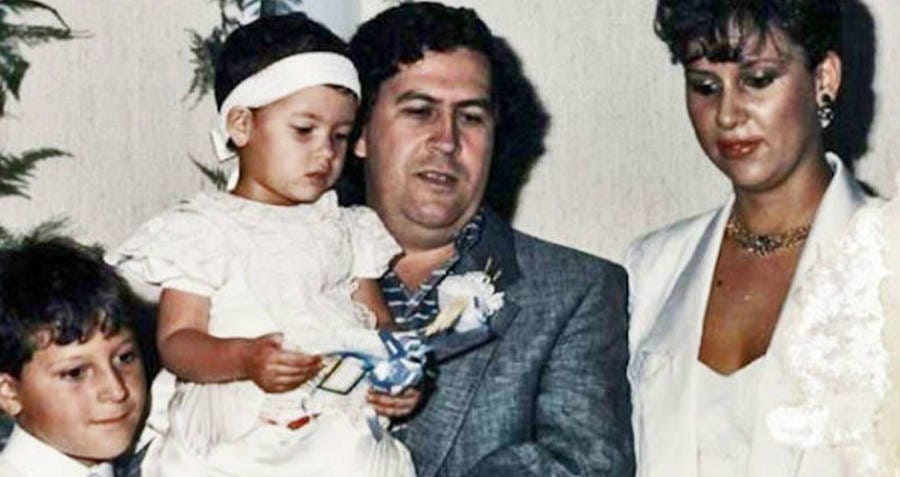

Manuela Escobar, the only daughter of the infamous Colombian drug lord Pablo Escobar, has spent much of her life evading the spotlight cast by her father’s notorious legacy. Born into a world of unimaginable wealth and peril, her story is one of resilience, reinvention, and quiet determination to forge a normal existence away from the shadows of the Medellín Cartel. As of 2025, at age 41, Manuela Escobar—now known as Juana Manuela Marroquín Santos—remains a figure of intrigue, living a low-profile life in Argentina. This comprehensive biography explores Manuela Escobar’s childhood, the harrowing events following her father’s death, and her efforts to build a future untainted by the past. From the opulent excesses of her early years to her current pursuits in real estate, uncover the untold aspects of Manuela Escobar’s journey toward anonymity and self-determination.
Early Life: A Childhood of Luxury and Hidden Dangers
Born into the Empire of “El Patrón”
Manuela Escobar entered the world on May 25, 1984, in Medellín, Colombia, as the second child of Pablo Escobar and his wife, María Victoria Henao. At the time, Pablo was already ascending as the “King of Cocaine,” amassing a fortune estimated at $30 billion through the Medellín Cartel, one of the most powerful drug trafficking organizations in history. Her birth was celebrated lavishly, symbolizing a personal triumph for Pablo, who doted on his family amid his criminal empire. Unlike her older brother, Juan Pablo (now Sebastián Marroquín, born in 1977), Manuela was the apple of her father’s eye—the “princess” he shielded from the violence that defined his world.
From infancy, Manuela Escobar’s life blended fairy-tale indulgence with underlying peril. Her family resided in Hacienda Nápoles, a sprawling 20-square-kilometer estate featuring a private zoo, artificial lakes, and sculptures of dinosaurs—Pablo’s extravagant gift to his children. She attended no public schools, receiving homeschooling to mitigate threats from rivals and law enforcement. Yet, this isolation couldn’t fully insulate her from the chaos.
Doting Father and Extravagant Gestures
Pablo Escobar’s devotion to Manuela Escobar was legendary, often eclipsing his ruthless public persona. Stories abound of his willingness to fulfill her whims, no matter how fantastical. For her third birthday, when she wished for a unicorn, Pablo reportedly had his men staple a horn to a horse’s head and attach wings to its back, transforming a mere animal into a mythical creature just for her delight. Another tale recounts him burning $2 million in cash to keep her warm during a hideout in the Colombian mountains, when firewood was scarce—a stark illustration of his priorities amid a crumbling empire.
These anecdotes paint Pablo as a tender father figure to Manuela Escobar, but they also underscore the moral contradictions of his life. To her, he was simply “Papito,” a provider who once quipped that the value of a billion dollars was “the value of your eyes, my princess.” However, the luxuries came at a cost: constant security details, armored vehicles, and the unspoken fear of assassination attempts.
The First Scars: Trauma from Cartel Violence
Manuela Escobar’s idyllic bubble shattered early. On January 13, 1988, at age three, she survived a car bomb explosion targeting her father outside their family mansion. The blast’s shockwave left her permanently deaf in one ear, a lifelong reminder of the cartel’s brutal underbelly. This incident, part of the escalating war between Pablo and Colombian authorities, forced the family into deeper seclusion. Homeschooling intensified, and playdates were nonexistent—Manuela’s world shrank to her family’s fortified compounds.
The Fall of Pablo Escobar: A Turning Point for Manuela
Father’s Death and Immediate Aftermath
On December 2, 1993, when Manuela Escobar was just nine years old, Pablo was gunned down on a Medellín rooftop by the Colombian National Police, ending his reign and plunging the family into chaos. The images of his bullet-riddled body flashed across global news, but for Manuela, the loss was profoundly personal. She idolized her father, unaware of the full scope of his atrocities—thousands of deaths, political assassinations, and a narco-terror campaign that terrorized Colombia.
In the wake of his death, Manuela Escobar, her mother, and brother faced immediate threats from vengeful rivals and authorities. The family’s assets were seized, including Hacienda Nápoles, which was later transformed into a public park and museum documenting Escobar’s crimes. Overwhelmed by grief and danger, they went into hiding, burning millions in cash to evade detection—a grim echo of Pablo’s earlier gesture to keep Manuela warm.
Exile and Relentless Pursuit
The Escobar survivors fled Colombia multiple times, seeking asylum in countries like Mozambique and South Africa, but were repeatedly denied due to Pablo’s infamy. By 1995, they settled in Buenos Aires, Argentina, under assumed identities: María Victoria became María Isabel Santos Caballero, Juan Pablo became Sebastián Marroquín, and Manuela adopted Juana Manuela Marroquín Santos. This relocation marked the beginning of Manuela Escobar’s deliberate erasure from public view.
Life in exile was far from the opulence of Medellín. The family lived modestly, scraping by on remnants of Pablo’s fortune while dodging extradition requests. In 1999, María and Sebastián were arrested in Argentina on charges of money laundering and falsifying documents, spending 18 months in detention before acquittal. Notably, Manuela Escobar evaded capture, solidifying her status as the family’s “ghost”—the only member never implicated in any crime.
Psychological Toll: Battling Trauma in Secrecy
The psychological scars ran deep for Manuela Escobar. Witnesses and reports suggest she grappled with severe depression and anxiety in her teens, haunted by her father’s death and the constant fear of discovery. Unlike her brother, who channeled his experiences into architecture, authorship, and public apologies to victims’ families via the 2009 documentary Sins of My Father, Manuela chose silence. Her mother’s 2018 memoir, Mrs. Escobar: My Life with Pablo, briefly touches on Manuela’s struggles, portraying a young woman desperate for normalcy amid unrelenting scrutiny.
Adulthood and Reinvention: Manuela Escobar Today
A Low-Profile Life in Argentina
As of November 2025, Manuela Escobar, now 41, resides quietly in Buenos Aires with her mother, maintaining the Marroquín Santos identity that has shielded her for three decades. She has no social media presence, no interviews, and no public appearances— a stark contrast to her brother’s high-profile lectures and book Pablo Escobar: My Father (2014). Sources describe her as a homemaker and budding entrepreneur, prioritizing privacy over legacy.
Reports indicate Manuela Escobar assists her mother in managing a real estate business, dealing in residential properties across Argentina—a far cry from the billions her father once controlled. This venture provides financial stability without drawing attention, allowing her to live modestly in a city that has become a sanctuary.
No Inheritance, No Spotlight: Choosing Anonymity
Unlike the myths of hidden Escobar treasures, Manuela Escobar inherited nothing substantial from her father’s empire; most assets were confiscated or laundered away. Her net worth remains undisclosed but is estimated to be modest, derived from family ventures rather than narco-wealth. Health-wise, she continues to manage the hearing loss from the 1988 bombing, but details are scarce.
Manuela Escobar’s deliberate obscurity extends to pop culture. While Netflix’s Narcos dramatized her childhood, portraying her as a symbol of Pablo’s humanity, the real Manuela has distanced herself from such portrayals, viewing them as exploitative.
Family Ties: A Bond Forged in Adversity
Though estranged from her brother due to his public life—Sebastián lives in Italy with his own family—Manuela Escobar shares a close relationship with her mother. The two women, survivors of a turbulent era, focus on healing and normalcy. Recent unconfirmed sightings place them at quiet family gatherings, underscoring Manuela’s commitment to a life unmarred by her surname.
Legacy: Beyond the Shadow of Pablo Escobar
Manuela Escobar’s story is a poignant counter-narrative to her father’s. While Pablo’s legacy is one of destruction—responsible for over 4,000 deaths and a war on the Colombian state—hers embodies redemption through reticence. As the sole Escobar untouched by legal repercussions, she represents the innocent casualties of narco-violence, advocating silently for privacy rights in the digital age.
In 2025, amid ongoing discussions of cartel resurgence and drug policy reform, Manuela Escobar’s choice to fade into obscurity inspires. She has never profited from her father’s image—no books, no tours—opting instead for quiet contributions to her community. Her life challenges the glorification of narcos in media, reminding us that behind every empire are families forever altered.
Conclusion: A Quiet Triumph Over Infamy
Manuela Escobar’s biography is not one of headlines but of hushed endurance. From a pampered child in a narco-palace to a reclusive entrepreneur in Buenos Aires, she has navigated trauma with grace, emerging as a testament to human resilience. At 41, Juana Manuela Marroquín Santos continues to honor her father’s love without endorsing his sins, proving that normalcy can be the ultimate rebellion against a chaotic past. In a world obsessed with notoriety, Manuela Escobar’s greatest achievement is her invisibility—a deliberate, dignified erasure of the Escobar name.


